
Have you ever wondered why users leave your website within seconds, even before seeing your content? In that critical moment, the WebP image format becomes the silent factor that decides whether your page feels fast and reliable or slow and forgettable.
Blank screens appear, images lag, and users make split-second decisions to abandon the site, often before it fully loads. Most website owners never witness these moments, yet they happen constantly, silently costing visibility, engagement, and conversions.
If you want to discover how image formats influence these split-second judgments and how to keep your visitors engaged, read on to uncover the strategies that make modern websites truly fast and efficient.
Why WebP Became the Industry Standard?
WebP earned its position not through marketing, but through measurable technical advantages that directly solve long-standing problems on the web. As websites evolved, older formats struggled to meet new performance expectations, while WebP adapted seamlessly.
Advantages & Features of WebP Image Format
- Produces significantly smaller file sizes without sacrificing visual clarity, enabling faster delivery across all network conditions
- Supports both static images and animations, reducing the need for multiple formats within the same project
- Handles transparency efficiently, replacing traditional use cases once dominated by PNG (For example, a typical 1MB JPEG image can be reduced to around 300KB in WebP format)
- Designed specifically for browsers, ensuring predictable rendering and performance consistency
- Improves user experience metrics that influence search visibility and engagement
- Integrates naturally with modern workflows focused on Image optimization for web
- Offers flexibility for developers through support of Lossy vs lossless WebP, allowing quality to be adjusted per use case
These characteristics explain why WebP is no longer considered optional as a key tool in effective website speed optimization. It aligns perfectly with how modern websites are built, delivered, and evaluated.
JPEG vs WebP vs PNG, Best Image Format for Web in 2026
Choosing an image format in 2026 requires understanding not only visual output but also performance impact.
In the second sentence, the keyword best Image format for Web in 2026 becomes essential because efficiency, scalability, and user expectations now dictate technical decisions.
Among the available options, including JPEG, PNG and WebP image format; which we will explain them in detail in the folloing:
- JPEG
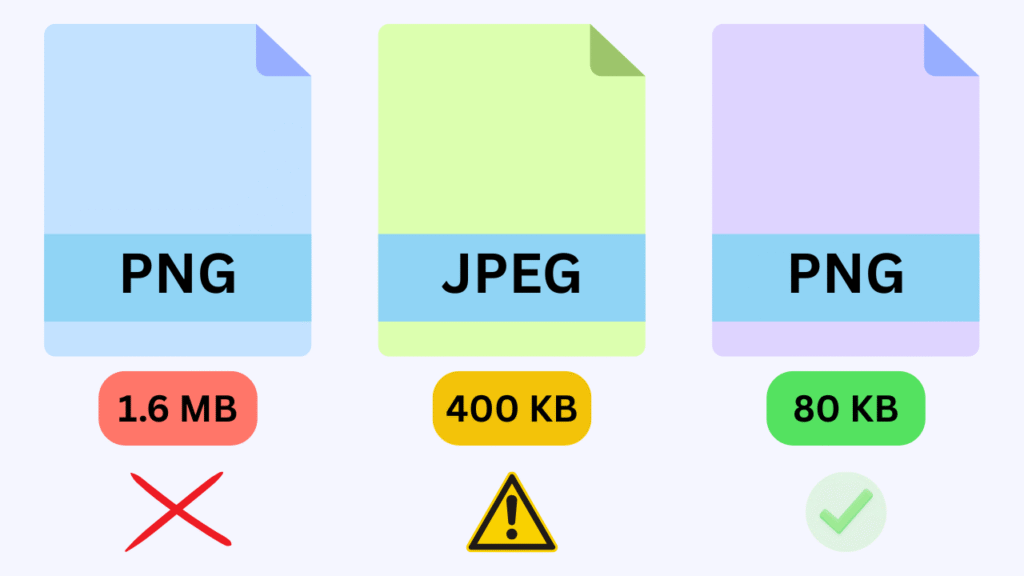
JPEG has been the standard for photographic images for decades due to its ability to compress complex visuals into relatively small files. It relies on lossy compression, permanently discarding image data to reduce size. While this works well at moderate compression levels, higher compression introduces visible artifacts and softness. JPEG does not support transparency or animation, limiting its role in modern interfaces. As websites push toward higher resolutions and faster delivery, JPEG increasingly shows its age, especially when compared in WebP vs JPEG performance evaluations.
- PNG
PNG was designed to preserve image quality through lossless compression, making it ideal for logos, icons, and interface elements that require sharp edges. Its support for transparency made it indispensable for many years. However, PNG files are often extremely large, especially for detailed or high-resolution images. This weight creates performance bottlenecks that conflict with modern expectations. While PNG still has niche applications, comparisons such as WebP vs PNG clearly demonstrate its inefficiency for large-scale web use.
- WebP
WebP image format as part of the broader movement toward Next-gen image formats, WebP represents a practical and widely supported solution rather than an experimental one. WebP earned its position not through marketing, but through measurable technical advantages that directly solve long-standing problems on the web. While WebP has become the industry standard, newer next-gen image formats like AVIF are emerging, offering even higher compression rates and improved visual quality, especially for high-resolution displays.
When evaluated side by side, the difference is clear. JPEG offers familiarity but limited flexibility. PNG delivers quality but at a heavy performance cost. WebP merges quality, efficiency, and versatility into a single format, making it the most balanced choice for modern websites.
- JPEG vs PNG vs WebP, Detailed Comparison Table for Web Use in 2026
| Feature | JPEG | PNG | WebP |
| Primary Use Case | Photographic images | Logos, icons, UI elements | All-purpose web images |
| Compression Type | Lossy only | Lossless only | Lossy and lossless |
| File Size Efficiency | Medium | Low | High |
| Image Quality at Small Sizes | Noticeable degradation | High but heavy | High with minimal loss |
| Transparency Support | No | Yes | Yes |
| Animation Support | No | No | Yes |
| Browser Compatibility | Universal | Universal | Modern browsers |
| Performance Impact | Moderate | High | Low |
| Mobile Friendliness | Limited | Weak | Excellent |
| SEO & Performance Readiness | Outdated | Situational | Future-ready |
| Scalability for Modern Websites | Low | Medium | High |
How Image Formats Affect Your Website?
Image formats play a critical role in how a website performs, ranks, and converts users. Heavy images increase server response times and delay content rendering, directly harming page load speed improvement efforts.
Faster formats like WebP image format, reduce data transfer, allowing browsers to display meaningful content sooner. This is especially important as Web performance 2026 standards increasingly focus on measurable user experience rather than theoretical optimization.
Search engines now prioritize sites that deliver efficient and stable experiences. Proper formatting supports Google image optimization by making images easier to crawl, index, and serve efficiently.
Optimized images also reduce layout shifts and improve visual stability, which is a key factor in core Web Vitals optimization. These metrics are no longer secondary; they directly influence rankings and visibility.
On mobile devices, the impact is even more pronounced. Limited bandwidth and inconsistent connectivity mean inefficient images quickly frustrate users. Choosing the right format significantly improves mobile page speed, ensuring content remains accessible and engaging regardless of device or location.
Modern formats also streamline image compression techniques, reducing manual optimization efforts while maintaining consistent quality.
From a user perspective, efficient images create smoother scrolling, quicker interactions, and a perception of professionalism. From a business perspective, they support fast loading images, lower bounce rates, and higher conversion potential. Image formats are no longer a design detail; they are a performance strategy.
Ending
In 2026, image formats define far more than visual appearance, they shape speed, usability, and credibility. WebP image format stands out because it was built for the realities of the modern web, not adapted from outdated standards.
Websites that adopt WebP are better prepared to meet evolving performance benchmarks, user expectations, and search engine requirements. Choosing the right image format is no longer a technical afterthought; it is a strategic decision that directly impacts success.
Now we want your input; Have you already transitioned your website images to WebP? Share your results. What challenges have you faced when optimizing images for performance? Interested in deeper technical guides or real-world case studies? Let us know.